
Sinanthropic floristic in the Guamuhaya mountain massif, Cuba
Article Sidebar
Main Article Content
Abstract
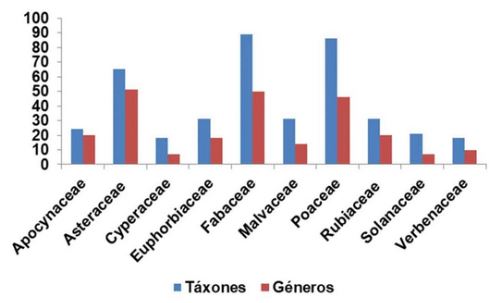
Ecosystem processes have a strong influence on the environmental conditions of territories, habitats and ecosystems, which are controlled by biological diversity, mainly flora, among other components. The evaluation of the synanthropism of the flora was carried out by analyzing the ecological characteristics of autochthonous, allochthonous and unknown species. The synanthropic flora in Guamuhaya yielded a total of 138 families, 524 genera, and 842 taxa. A 60.6% apophytism was observed, which allowed us to understand the response of species to variations in environmental conditions, as well as their impact on the functioning of ecosystems. Native synanthropic species enhance the richness of taxa and the ecological functions of conservation and recovery of ecosystems. With these autochthonous synanthropic taxa, the gradual rehabilitation of the forest heritage could be achieved in the succession process. Anthropogenic modifications altered the magnitude and stability of ecosystem processes, causing the alteration of ecological functions as natural ecosystems were transformed, allowing the entry of 33.7% of invasive synanthropic species into this massif.